The real cost of Soundproofing bedrooms in busy neighborhoods: Double-glazed windows and acoustic foam: hidden expenses revealed
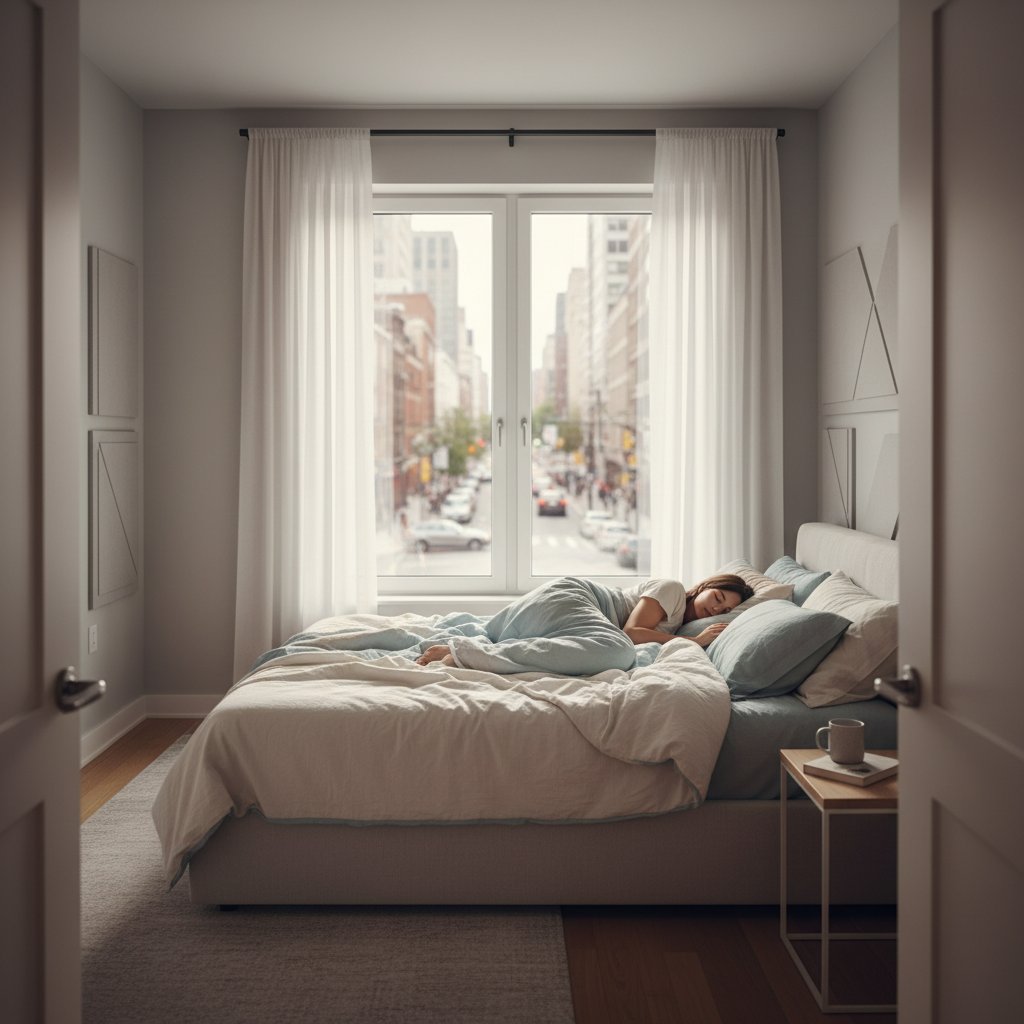
The Night My Neighbor's Drum Solo Changed Everything
Three AM. That's when Jake next door decided his newfound passion for metal drumming needed practice. Again. I lay there, pillow wrapped around my head, wondering if I'd somehow moved next to a recording studio without noticing. The next morning, bleary-eyed and desperate, I typed "soundproof bedroom" into Google. The results promised salvation for $300. Spoiler alert: they lied.
Six months and $8,400 later, I finally sleep through the night. But getting there? That's a story about sticker shock, hidden costs, and the stuff nobody tells you when you're just trying to catch some Z's in a city that never shuts up.
Why Your $300 Budget Is Actually Adorable
Here's what the online gurus don't mention: acoustic foam panels on Amazon look fantastic in product photos. They're cheap—maybe $50 for a pack. Slap them on your walls, problem solved, right?
Wrong. Those foam panels reduce echo, which is great if you're recording a podcast. But blocking the actual noise from outside? They're about as effective as asking your neighbors politely to keep it down. Which, trust me, I also tried.
Real noise reduction means tackling how sound travels through physical structures. We're talking windows, walls, doors, and even electrical outlets. Yes, those innocent-looking wall sockets are basically tiny highways for sound waves.
The Double-Glazed Window Reality Check
Double-glazed windows became my first serious investment. The quotes ranged from $450 to $900 per window, depending on size and quality. My bedroom has two large windows. Do the math—that's potentially $1,800 before anyone's even shown up with tools.
But wait, there's more! Installation ran another $400 because my 1960s apartment building needed custom fitting. The frames were slightly warped (old building charm, the landlord called it). Then came the reveal: standard double-glazing reduces noise by about 20-25%. Helpful, but not the silence sanctuary I'd imagined.
For serious noise reduction—the kind that blocks garbage trucks and car alarms—you need acoustic laminated glass between those panes. Add another $300-500 per window. My window guy, Carlos, put it bluntly: "You want quiet or you want cheap? Pick one."
The Expenses Nobody Mentions Until You're Already Committed
Door Gaps Are Sound's Best Friend
After dropping three grand on windows, I discovered sound sneaking under my bedroom door like a teenager past curfew. The gap was maybe half an inch, but it might as well have been a welcome mat for noise.
A proper acoustic door seal cost $180. The specialized door sweep? Another $90. Installing a solid-core door instead of my hollow builder-grade one? That's $300-600 for the door, plus $150-200 for installation. Suddenly we're looking at another thousand bucks.
Walls: The Money Pit You Can't Ignore
Acoustic foam might be useless for blocking external noise, but proper wall treatment isn't cheap either. Mass-loaded vinyl—the actual stuff that works—costs $2-3 per square foot. My bedroom walls total about 400 square feet. That's $800-1,200 just for materials.
Installation? Unless you're handy with construction, you're hiring someone. Labor ran me $800 because it involved removing baseboards, hanging the vinyl, then adding another drywall layer. My contractor, Lisa, explained: "Sound needs mass to stop it. We're basically building a second wall inside your wall."
The Ventilation Problem Nobody Talks About
Here's a fun surprise: seal your room effectively, and you've created an airtight box. Great for sound, terrible for breathing. I woke up one morning feeling like I'd been sleeping in a plastic bag.
The solution? Acoustic vents that allow airflow while blocking sound. These specialized units cost $200-400 each, and you typically need at least two for proper circulation. Installation meant cutting holes in walls—another $300 in labor.
What Actually Works (And What's Worth Skipping)
After living through this expensive education, here's my honest breakdown:
Worth every penny: Acoustic laminated double-glazing knocked out 80% of street noise. The mass-loaded vinyl stopped my neighbor's bass from rattling my bookshelf. These weren't cheap, but they delivered.
Moderate value: Door seals and sweeps helped, though the improvement was subtler. Think of them as supporting actors, not the stars.
Skip it: Those decorative acoustic foam panels. Unless you like the aesthetic, save your money. They're solving a problem you probably don't have.
Key Takeaways: The Real Numbers
- Acoustic double-glazed windows: $800-1,400 per window installed (figure $2,500-4,000 for an average bedroom)
- Mass-loaded vinyl wall treatment: $1,600-2,000 including installation
- Solid-core door with seals: $600-1,000 total
- Acoustic ventilation: $700-1,100
- Realistic total for effective soundproofing: $6,000-10,000
- Timeline: 2-4 weeks from consultation to completion
The Permission Problem
Renters, we need to talk. Everything I described? Most requires landlord approval. Some landlords are cool with improvements. Others treat a picture hook like vandalism. I got lucky—my landlord agreed because I offered to cover costs and leave the improvements in place.
If you're renting, start with the non-permanent solutions: window inserts (removable acoustic panels that sit inside window frames, $300-500 each), heavy curtains with sound-dampening backing ($150-300), and door seals that don't require screws. You'll get maybe 40-50% noise reduction instead of 80%, but it beats nothing.
Was It Worth It?
I sleep now. Really sleep. The garbage trucks at 5 AM? Barely notice them. Jake's drum sessions? Muffled enough that I can drown them out with a fan.
Eight thousand dollars is a lot of money. But I was losing my mind at three grand less sleep. My productivity tanked, my mood was perpetually cranky, and I started researching moving to the countryside unironically.
The hidden costs hurt because they're, well, hidden. Nobody wants to tell you that fixing one thing reveals another problem. But if you're serious about actually solving noise issues—not just making them slightly better—budget for the real number. It's somewhere between a used car and a new one. Your sanity might just be worth it.